
Assistant Professor of Colorectal Surgery Shaheed Suhrawardy Medical College & Hospital, Dhaka
Dr. Muhammad Nazrul Islam
MBBS, BCS (Health), FCPS (Surgery), MS (Colorectal Surgery) FACS (USA)
Colorectal General & Laparoscopic Surgeon
Assistant Professor, Department of Colorectal Surgery
Shaheed Suhrawardy Medical College & Hospital, Dhaka
 Chamber 1
Farazy Hospital
Chamber 2Module G. Hospital
Colorectal General & Laparoscopic Surgeon
Safe Colorectal & General Surgery in Dhaka, Bangladesh — Honest and Clear Guidance
Bleeding, pain or something unusual near your anus or abdomen — most people feel too embarrassed to talk about it. Even with their own family.
I understand this deeply. In over twenty years of practice, patients with পাইলস (piles), এনাল ফিশার (fissure), ফিস্টুলা (fistula), হার্নিয়া (hernia) and পিত্তথলির পাথর (gallstones) have told me they waited months sometimes years —before finally coming.
Please do not do that to yourself.
Come and talk to me. Tell me what you are feeling. We will figure it out together.
— Dr. Muhammad Nazrul Islam, FCPS, MS (Colorectal), FACS (USA), Assistant Professor (Colorectal Surgery), Shaheed Suhrawardy Medical College & Hospital, Dhaka
Describe Your ProblemContact for Appointment
20+ years in surgery · 50,000+ surgeries · 300,000+ patients
Just Tell Me What You Feel
Most people who come for the first time do not know the name of their condition. That is completely fine. You do not need to know whether it is পাইলস, এনাল ফিশার, ফিস্টুলা or something else. Just describe what you feel — the pain, the bleeding, the discomfort, the fear. That is enough to get started.Below are some common symptoms. Do any of these sound familiar?
About Dr. Muhammad Nazrul Islam
Dr. Muhammad Nazrul Islam is one of Dhaka's experienced colorectal and general surgeons. He has spent over 20 years treating patients with conditions like পাইলস (piles), এনাল ফিশার (fissure), ফিস্টুলা (fistula), হার্নিয়া (hernia) and পিত্তথলির পাথর (gallstones).
View full profileHe trained in Bangladesh and the USA. He holds FCPS, MS (Colorectal Surgery) and FACS — the fellowship of the American College of Surgeons. He currently serves as Assistant Professor of Colorectal Surgery at Shaheed Suhrawardy Medical College & Hospital, Dhaka.
Every patient gets a clear explanation. Every treatment decision is based on evidence — and on what is truly best for that individual person.
Surgical Experience at a Glance
20+
Years in surgical practice
50,000+
Surgeries performed
300,000+
Patients consulted
These numbers are approximate, based on long-term clinical work in government and private hospitals, and are shared to give a general idea of experience.
Conditions & Treatments
Below are the conditions I treat most commonly. Each condition page explains the causes, symptomsand treatment options in plain language — in both Bangla and English. Not sure which condition matches your symptoms? That is fine. Just describe what you feel and we will work it out together.
Colorectal Conditions
Piles (Hemorrhoids) / পাইলস/ গেজ রোগ
Swollen veins in the anus or lower rectum that may cause bleeding, itching, pain or a lump coming out during stool.
Learn moreAnal Fissure/
পায়ুপথে ঘা
A small tear in the lining of the anus, usually causing sharp pain during stool and fresh blood on the tissue.
Learn moreFistula and Anorectal Abscess ফিস্টুলা / ভগন্দর
An abscess is a collection of pus near the anus. A fistula is a tunnel connecting an infected gland inside to the skin outside, often causing discharge
Learn moreColon and Rectal Cancer/ কোলন ক্যান্সার/ বৃহদান্ত্রের ক্যান্সার
Cancer of the large intestine or rectum. Early symptoms can be mild, so timely evaluation of bleeding, change in bowel habit or weight loss is important.
Learn moreBleeding from the Anus/Rectum/ পায়ুপথে রক্তপাত / পায়খানায় রক্ত
Bleeding can come from piles, fissure, polyps, infection or cancer. Any repeated or heavy bleeding should be evaluated properly.
Learn moreRectal Prolapse/ মলদ্বার বের হয়ে আসা
A condition where the rectum slides down and may come out through the anus, causing discomfort, bleeding or difficulty controlling stool.
Learn moreProctitis and Rectal Pain/ মলদ্বারে ব্যথা ও জ্বালা
Inflammation of the rectum can cause pain, a feeling of incomplete evacuation, bleeding and mucus discharge.
Learn moreSevere Constipation/ কোষ্ঠকাঠিন্য/ পায়খানা না হওয়া
Difficult or infrequent bowel movements with hard stool and straining. Long-term constipation can damage the anus and rectum.
Learn moreAnal Itching (Pruritus Ani)/ পায়ুপথে চুলকানি/ মলদ্বারে চুলকানি
Persistent itching around the anus, often due to skin irritation, infection, piles or hygiene issues.
Learn morePilonidal Sinus/ নিতম্বের ঘা
A small track or cavity near the tailbone that may collect hair and debris, often leading to painful swelling or repeated infections.
Learn moreCrohn's Disease/ পেটের প্রদাহ
A chronic inflammatory bowel disease that can affect any part of the digestive tract and may cause pain, diarrhea, weight loss and anal problems
Learn moreUlcerative Colitis and Bloody Dysentery/ রক্ত আমাশয়
An inflammatory disease affecting the colon and rectum, often causing long-term diarrhea with blood, urgency and abdominal pain.
Learn moreGeneral Surgery
Gallstones/ পিত্তথলির পাথর/ পিত্তে পাথর
Hardened deposits in the gallbladder that may cause upper right abdominal pain, especially after fatty meals, and sometimes infection or jaundice.
Learn moreHernia/ হার্নিয়া
A bulge that occurs when an internal organ pushes through a weak spot in the abdominal wall, commonly in the groin, umbilicus or previous scar.
Learn moreIncisional Hernia/ অপারেশনের জায়গায় হার্নিয়া
A hernia that appears at the site of a previous surgical incision in the abdomen, due to weakness in the scar area.
Learn moreAppendicitis/ অ্যাপেন্ডিসাইটিস/ অ্যাপেন্ডিক্সের ব্যথা
Inflammation of the appendix, usually causing pain starting near the navel and then shifting to the right lower abdomen, often requiring emergency surgery.
Learn moreHydrocele/ অণ্ডকোষে পানি
A fluid-filled swelling around a testicle, usually painless but may be uncomfortable or embarrassing, and often treated by surgery if large.
Learn moreCBD Stone (Common Bile Duct Stone)/ পিত্তনালীতে পাথর
A stone that travels from the gallbladder and blocks the main bile duct, causing pain, jaundice and sometimes serious infection.
Learn moreStomach Cancer/ পাকস্থলীর ক্যান্সার · পেটের ক্যান্সার
Cancer arising from the lining of the stomach. Early symptoms are often vague, so persistent indigestion, weight loss or vomiting should be checked.
Learn moreAny Tumor in the Upper Body/ শরীরের উপরের অংশে টিউমার/ চাকা বা গোটা
Lumps or tumors in the breast, chest wall, neck or other upper body areas require proper evaluation to decide whether they are benign or malignant.
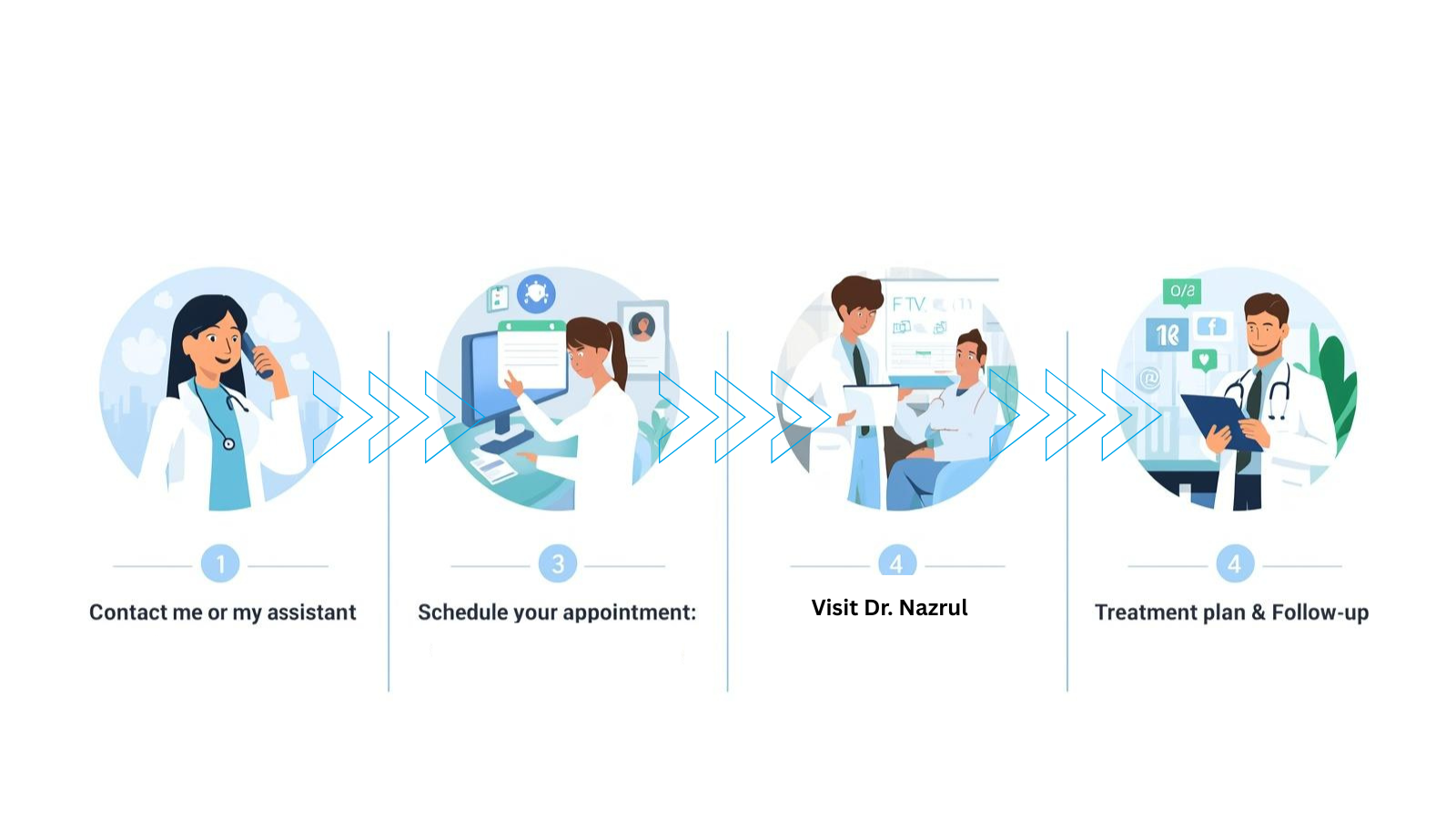
Learn moreHow to Consult With Me
Patient Stories – Life After Treatment
Real patients. Real results. In their own words.
Many people feel anxious before surgery. Worried about pain. Worried about recovery. Worried about whether it will actually work.
These stories are shared by patients who felt exactly the same way before coming to Dr. Nazrul. Patients with পাইলস (piles), এনাল ফিশার (fissure), হার্নিয়া (hernia) and পিত্তথলির পাথর (gallstones) — who came in nervous and left with their life back to normal.
We hope their words help you take that first step.
Learn About Your Condition
Understanding your condition makes every decision easier — and less frightening. These articles are written in plain language for patients and families. No medical jargon. No confusing terminology. Just clear, honest information about conditions like পাইলস, এনাল ফিশার, হার্নিয়া and পিত্তথলির পাথর — so you can walk into your consultation feeling informed and confident.
1
The Complete Guide to Piles Treatment in Bangladesh
| Medical Disclaimer: This article is for education only. It does not replace medical advice, diagnosis, or treatment. If you have rectal bleeding, severe pain, fever, a painful lump near the anus, weakness, or dizziness, please see a qualified doctor right away. Not all rectal bleeding is caused by piles. |
Piles are common. But they can feel scary, painful, and embarrassing.
You may notice bleeding after passing stool. You may feel itching, burning, swelling, or a lump near the anus. Some people feel pain when sitting. Others feel like the bowel does not empty fully. Many people stay silent because they feel shy. They wait too long and suffer more than they need to.
The good news is simple. Piles treatment in Bangladesh is now easier, safer, and more advanced than before. Many people get better with home care and lifestyle changes. Others may need medicines, clinic procedures, laser treatment, or surgery. With the right care, you can get relief.
|
Why Choose Dr. Muhammad Nazrul Islam? When dealing with such a highly sensitive and painful medical issue, you need a doctor with deep clinical expertise and a genuinely kind, empathetic heart. Dr. Muhammad Nazrul Islam is highly regarded as one of the top colorectal specialists for piles treatment in Bangladesh. With over 20 years of active surgical experience, he has successfully performed more than50,000 life-changing surgeries. He specializes heavily in advanced, minimally invasive laser treatments that offer maximum relief with minimal pain. Dr. Nazrul follows a strict patient-first approach. He takes the dedicated time to listen to your worries, explains your diagnosis without using confusing medical jargon, and guides you toward the safest, most effective treatment tailored perfectly for your specific body.
|
This guide explains:
- piles meaning in Bengali
- what is piles
- common piles symptoms
- causes and risk factors
- symptoms of piles in female
- how to treat piles at home
- when to see a piles doctor Dhaka
- medical treatment options, including laser surgery
- common myths, such as can piles cause cancer and is piles contagious
Piles Meaning in Bengali (পাইলস এর অর্থ ও সামাজিক প্রেক্ষাপট)
বাংলায় পাইলসকে সাধারণত অর্শ বলা হয়। এটি এমন একটি শারীরিক সমস্যা, যেখানে পায়ুপথের ভেতরে বা বাইরে রক্তনালি ফুলে যায়। ডাক্তারি ভাষায় একে হেমোরয়েডও বলা হয়।
তবে সাধারণ মানুষ এ রোগকে অনেকভাবে ডাকে, যেমন—“মলদ্বারে গুটি হয়েছে”, “পায়খানার রাস্তা ফুলে গেছে”, “পায়খানার সঙ্গে রক্ত যায়”, বা “বসতে খুব ব্যথা করে”। গ্রামের মানুষ বা বয়স্করা অনেক সময় একে শুধু “অর্শের ব্যথা” বলেও বোঝান।
বাংলাদেশে পাইলস নিয়ে কথা বলতে ইতস্তত বোধ করেন। মহিলাদের জন্য এই সমস্যা আরও প্রকট আকার ধারন করে।
অনেকেই লজ্জার কারণে পরিবারের কাউকে বলেন না, ডাক্তার দেখাতেও দেরি করেন। বিশেষ করে রক্তপাত, চুলকানি, জ্বালাপোড়া, বা পায়ুপথে কিছু বের হয়ে আসার মতো উপসর্গ থাকলেও অনেকে চুপচাপ সহ্য করেন। তারা ভাবেন, “এ কথা কাউকে বলা যায় না” বা “নিজে নিজে ঠিক হয়ে যাবে”। এই নীরবতাই অনেক সময় সমস্যাকে আরও বাড়িয়ে দেয়।
মনে রাখা জরুরি, পাইলস খুবই সাধারণ একটি রোগ। এটি লজ্জার নয়, চিকিৎসার বিষয়। আপনি যত দ্রুত খোলামেলা ভাবে সমস্যা বলবেন, তত দ্রুত সঠিক পরামর্শ ও চিকিৎসা পাবেন।
So if you are searching for piles meaning in Bengali or what is piles in Bangla, it usually means swollen veins around the anal area that can cause bleeding, pain, itching, or swelling.
What Is Piles?
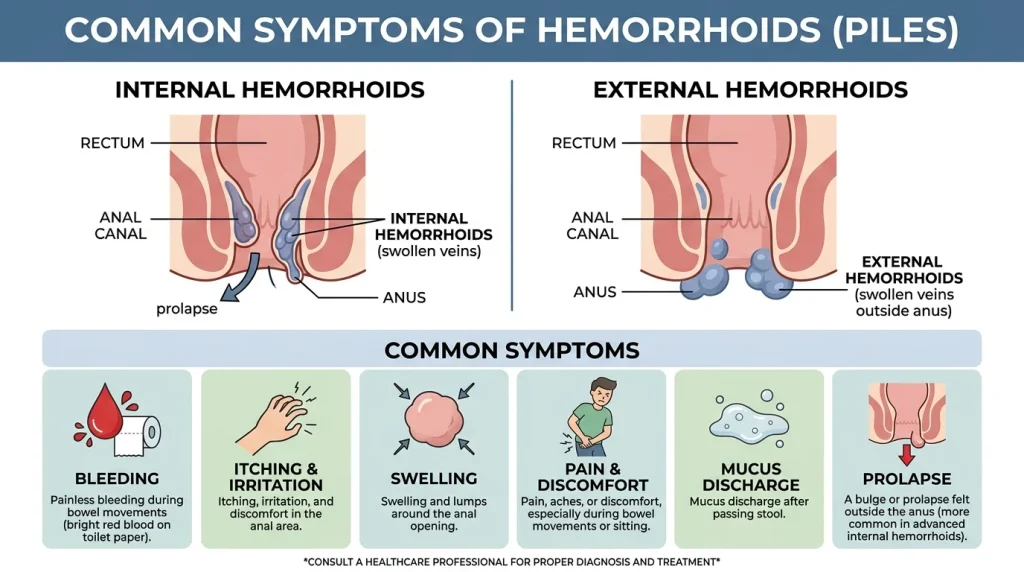
Piles are swollen veins in the lower rectum or around the anus. The medical name is hemorrhoids.
In short, piles means those swollen, painful, or bleeding veins that appear in or around the anus or rectum.
This condition is common in Bangladesh, and many families use these Bengali terms when talking about the problem or seeking treatment.
Understanding the local meaning helps break the hesitation and makes it easier for you or your loved ones to talk to a doctor or share your symptoms.
Think of piles like varicose veins, but in a sensitive place.
These veins can swell when there is too much pressure in the lower rectum. This pressure often comes from constipation, straining during bowel movements, pregnancy, heavy lifting, or sitting too long.
Piles are not rare. They affect men and women. Young adults can get them. Older adults can get them too.
Types of Piles
Understanding the type of piles helps you understand the symptoms and treatment.
Internal Piles
Internal piles are inside the rectum. In the early stage, they often do not cause pain because that area has fewer pain nerves.
Common signs include:
- bright red bleeding after stool
- a feeling of fullness
- tissue coming out during stool in later stages
External Piles
External piles form under the skin around the anus. These are usually more uncomfortable.
Common signs include:
- itching
- swelling
- pain while sitting
- pain during cleaning
- a tender lump near the anus
Thrombosed Piles
Sometimes blood forms a clot inside an external pile. This is called a thrombosed pile.
This can cause:
- sudden severe pain
- a hard lump
- purple or bluish swelling
- difficulty sitting or walking comfortably
This may need urgent medical care.
What Are the Common Piles Symptoms?
Many people search for how do you know if you have piles. The answer depends on the type and stage. Still, some symptoms are very common.
Here are the most common piles symptoms:
- bright red blood on toilet paper or stool
- itching around the anus
- pain during or after bowel movement
- burning feeling
- swelling near the anus
- a lump near the anus
- mucus discharge
- feeling that stool is not fully passed
- discomfort while sitting
Some people only have bleeding. Some have pain and swelling. Some feel a small lump that comes out during stool and then goes back in.
If you are wondering what do piles feel like, many patients describe them as:
- a sore or burning feeling
- pressure in the anal area
- itching that does not stop
- a painful lump
- a heavy feeling after passing stool
Symptoms of Piles in Female
The symptoms of piles in female are mostly similar to symptoms in men. But some women may notice piles more during pregnancy, after childbirth, or when constipation becomes worse due to hormone changes.
Common symptoms of piles in female include:
- rectal bleeding
- itching around the anus
- pain during stool
- swelling or a lump near the anus
- discomfort while sitting
- pain after childbirth
- worsening symptoms during pregnancy
Pregnancy raises pressure in the pelvic area. Labor and pushing during childbirth can also strain the veins. That is why piles are common in pregnant women and new mothers.
If you are pregnant and notice bleeding or pain, do not guess the cause. Speak with your doctor. Safe treatment depends on your stage of pregnancy and your symptoms.
Why Piles Happen
Many people ask, why piles occur or what causes piles. The short answer is pressure.
Piles happen when extra pressure builds up in the veins around the rectum and anus.
Common causes include:
1. Constipation
This is one of the main reasons. Hard stool is difficult to pass. So you strain more. This pressure can swell the veins.
2. Low-Fiber Diet
A diet low in fiber can make stool hard and dry. Fiber helps keep stool soft and easy to pass.
Foods that may increase constipation if eaten too much include:
- processed snacks
- fast food
- low-fiber meals
- too much red meat
- refined grains
3. Sitting Too Long
Long hours of sitting at a desk, in a car, or on the toilet can increase pressure in the anal area.
4. Pregnancy
The growing baby puts pressure on pelvic veins. Hormonal changes can also slow bowel movement and worsen constipation.
5. Heavy Lifting
Frequent heavy lifting at work or in the gym can increase pressure inside the abdomen.
6. Excess Weight
Extra body weight adds more pressure to the lower body and pelvic area.
7. Aging
As you get older, the tissues that support the veins become weaker.
The Four Grades of Internal Piles
Doctors often classify internal piles into four grades.
Grade 1
- inside the rectum
- may bleed
- do not come out
Grade 2
- come out during stool
- go back in on their own
Grade 3
- come out during stool
- need to be pushed back in gently
Grade 4
- stay outside all the time
- cannot be pushed back in
- may be painful and swollen
Why does this matter? Because treatment depends a lot on the grade.
How to Treat Piles Naturally and at Home
Many people search for how to treat piles naturally, how to cure piles at home, or how to get rid of piles naturally. Among many piles treatment options, home care can help a lot in mild or early cases. It can also support healing after treatment.
Still, home care is not enough for everyone. If symptoms are severe, repeated, or long-lasting, see a doctor.
Here are practical steps you can start today.
1. Eat More Fiber
Fiber helps soften stool and reduce straining.
Good fiber-rich foods include:
- vegetables
- papaya
- guava
- banana
- oats
- brown rice
- whole grains
- lentils
- beans
A simple example: if you often eat fried snacks, white rice, and low-fiber meals, your stool may become hard. Adding fruits, vegetables, and oats can help within days.
2. Drink Enough Water
Water helps fiber work better. Without enough water, stool may still stay hard.
Try to drink about 8 to 10 glasses a day unless your doctor has told you to limit fluids.
3. Do Not Strain
Do not push hard during bowel movements. Straining is a major cause of piles.
Take your time, but do not force stool out.
4. Avoid Long Toilet Sitting
Many people sit on the toilet with a phone for 10 to 20 minutes. This increases pressure on the veins.
Try to finish in a few minutes.
5. Take Warm Sitz Baths
Sit in warm water for 10 to 15 minutes, 2 to 3 times a day. This can ease pain, reduce irritation, and relax the area.
6. Stay Active
Walking helps bowel movement. Even a 20 to 30 minute walk can help reduce constipation.
7. Use Doctor-Approved Creams Carefully
Some creams can reduce itching or swelling for a short time. But not every cream is right for every patient. Long-term self-treatment can delay proper diagnosis.
8. Keep the Area Clean and Dry
Wash gently with water. Avoid harsh rubbing. Pat dry softly.
Can piles cure automatically?
Mild piles may improve when constipation and straining stop. But if the causes continue, piles often come back. So the goal is not just short-term relief. The goal is to fix the daily habits causing the problem.
Medical Treatment for Piles
If home care does not help enough, a doctor may suggest medical treatment.
Many people search for how to treat piles, what is the best treatment for piles, or is it possible to cure piles without surgery. The answer depends on your symptoms, grade, and how long you have had the problem.
Medicines and Non-Surgical Care
For mild to moderate cases, doctors may suggest:
- pain relief medicine
- anti-inflammatory creams or ointments
- stool softeners
- fiber supplements
- laxatives for short-term use
- warm sitz baths
These treatments can control symptoms and make bowel movements easier. They work best when paired with lifestyle changes.
Rubber Band Ligation
This is a common clinic treatment for some internal piles.
How it works:
- The doctor places a small rubber band around the base of the pile.
- Blood supply stops.
- The pile shrinks and falls off after a few days.
It is often used for Grade 2 and some Grade 3 piles.
Benefits may include:
- no major surgery
- quick procedure
- short recovery time
Injection or Other Clinic Procedures
In some cases, doctors may use other office-based procedures to shrink piles. The best method depends on the patient and the doctor’s assessment.
Laser Piles Surgery in Bangladesh
Laser piles surgery is now a popular option for selected patients in Bangladesh. Many people ask if it is safe and whether it works well.
Laser treatment uses focused energy to treat swollen pile tissue with precision.
Possible benefits include:
- less bleeding
- less pain after treatment
- smaller wounds
- shorter hospital stay
- faster return to normal life
Laser treatment may be suitable for some Grade 2 and Grade 3 cases, and sometimes other selected cases. But it is not the best choice for every patient.
A proper examination matters first.
Traditional Surgery for Severe Piles
Some piles are too large, too advanced, or too painful for simple treatment. In those cases, surgery may be the best option.
Traditional surgery may be advised for:
- Grade 4 piles
- large prolapsed piles
- repeated heavy bleeding
- thrombosed piles
- piles that do not improve with other treatment
Recovery usually takes longer than laser treatment. But for the right patient, it can give long-term relief.
When You Should See a Piles Doctor
Please do not ignore repeated bleeding or pain. See a doctor if you have:
- rectal bleeding more than once
- severe pain
- a hard painful lump
- symptoms lasting more than a week
- weakness or dizziness
- fever
- change in bowel habits
- unexplained weight loss
If you are looking for a piles doctor Dhaka or best piles doctor in Dhaka, choose a qualified colorectal surgeon or specialist who regularly treats piles and other anal conditions. Proper diagnosis matters because not every anal symptom is piles.
What Doctor to See for Piles?
Many people ask, which doctor to consult for piles.
The best choice is usually:
- a colorectal surgeon
- a general surgeon with experience in anorectal disease
- in some cases, a gastroenterologist may also evaluate related bowel symptoms
A specialist can:
- confirm if it is really piles
- identify the type and grade
- rule out fissure, fistula, infection, or other causes
- suggest the safest treatment
- guide you through recovery
Common Myths and Questions About Piles
There is a lot of confusion online. Let us clear up some common myths.
Can Piles Cause Cancer?
No. Piles do not turn into cancer.
So if you are asking can piles cause cancer or does piles cause cancer, the answer is no.
But this is very important: some symptoms of piles, especially rectal bleeding, can also happen in serious conditions, including colorectal cancer. That is why you should not assume bleeding is “just piles” without a check-up.
Is Piles Dangerous?
Piles are usually not life-threatening. But they can still cause real problems.
If left untreated, they may lead to:
- ongoing pain
- repeated bleeding
- anemia from blood loss
- prolapse
- clotting
- infection in rare cases
So if you are asking is piles dangerous, the answer is: usually not deadly, but it should not be ignored.
Is Piles Contagious?
No. Piles are not contagious.
You cannot catch piles from another person by touch, food, sharing a toilet, or living together.
Can Piles Be Cured Permanently?
They can often be treated very successfully. Many people get long-term relief.
But if constipation, straining, low-fiber eating, and long toilet sitting continue, piles can return.
So permanent relief depends on two things:
- the right treatment
- long-term healthy bowel habits
Does Piles Cause Weight Loss?
Piles itself does not usually cause weight loss.
If you have rectal bleeding with weight loss, loss of appetite, or major bowel changes, get checked quickly. Those symptoms need medical evaluation.
Is Piles Normal?
Yes, piles are common. Many adults will face them at some point. But common does not mean you should ignore them.
Can Piles Affect Sex?
Piles can cause discomfort, pain, and stress, which may affect sexual comfort for some people. If you have pain, bleeding, or swelling, it is best to get treated and follow your doctor’s advice.
Can Anal Sex Cause Piles?
Anal sex may irritate the anal area and may worsen symptoms in some people, but piles usually develop from pressure-related causes like constipation, straining, and pregnancy. If you have anal pain or bleeding, do not assume the cause. Get proper evaluation.
How to Prevent Piles
Prevention is one of the most important parts of treatment.
Here are simple steps:
- eat fiber every day
- drink enough water
- avoid constipation
- do not strain
- avoid long toilet sitting
- walk daily
- maintain a healthy body weight
- respond to the urge to pass stool on time
- avoid lifting heavy things in the wrong way
A good daily routine can lower the chance of piles coming back.
Recovery After Piles Treatment
Whether you have clinic treatment, laser treatment, or surgery, aftercare matters.
Follow these basic steps:
1. Take Medicine on Time
Use pain medicine, stool softeners, and other medicines exactly as advised.
2. Keep Stool Soft
Continue your high-fiber diet and water intake.
3. Use Warm Sitz Baths
This helps with pain relief and hygiene.
4. Avoid Heavy Work
Do not lift heavy items until your doctor says it is safe.
5. Attend Follow-Up Visits
These visits help your doctor check healing and prevent complications.
6. Watch for Warning Signs
Call your doctor if you have:
- heavy bleeding
- fever
- worsening pain
- pus or bad-smelling discharge
- trouble passing urine
Frequently Asked Questions (FAQ)
Q: What is the treatment for piles? (পাইলস এর চিকিৎসা কি?)
A: The treatment depends entirely on your stage. Grade 1 and 2 piles are treated with high-fiber diets, plenty of water, medicated creams, and warm sitz baths.
Moderate piles might need a quick rubber band ligation. Severe, painful piles are best treated with advanced laser surgery or traditional operations for a permanent cure.
Q: How to cure piles without surgery? (অপারেশন ছাড়া পাইলস ভালো করার উপায়)
A: You can often cure early-stage piles without surgery by changing your daily habits. Eat plenty of fibrous foods like papaya, vegetables, and whole grains.
Drink 3 liters of water a day. Never strain on the toilet, and do not sit on the commode reading your phone. Doctors can also use non-surgical methods like rubber band ligation to fix the issue in the clinic.
Q: Is laser treatment safe for piles? (লেজার চিকিৎসায় পাইলস কি সম্পূর্ণ ভালো হয়?)
A: Yes, laser surgery is incredibly safe and highly effective. It completely shrinks the swollen vein without cutting the skin. It causes almost zero bleeding, very little pain, and allows you to return to your normal life much faster than traditional cutting surgery.
Q: Can piles be cured completely?
A: Absolutely. With the correct medical approach, proper diet, and expert intervention, piles can be completely cured. However, you must maintain good bathroom habits and a high-fiber diet to ensure they do not come back years later.
Q: Is piles surgery painful?
A: Traditional surgery involves moderate recovery pain, which we manage closely with strong medications. However, modern laser surgery is incredibly gentle. Most patients report only a dull ache for a few days, rather than sharp pain.
Q: How much does piles treatment cost in Bangladesh?
A: The cost is highly variable. Basic consultations and medical prescriptions are very affordable. Minimally invasive clinic procedures cost slightly more. Advanced laser surgery and traditional operations require a larger investment but offer a permanent, life-changing solution. Your doctor will explain all costs transparently during your visit.
Q: What happens if I ignore my bleeding piles?
A: Ignoring the symptoms is dangerous. It leads to worsening pain, chronic daily bleeding, severe anemia (loss of blood), and eventually guarantees the need for major, complicated surgery. Seek help early.
Final Thoughts
Piles can affect your comfort, sleep, work, and peace of mind. But you do not have to suffer in silence. Good piles treatment in Bangladesh is available, from simple home care to advanced laser surgery and standard surgical treatment.
The first step is to understand the problem. The second step is to act early.
Remember the basics:
- know the common piles symptoms
- fix constipation
- eat more fiber
- drink enough water
- avoid straining
- get checked if bleeding continues
If your symptoms are ongoing, painful, or worrying, speak with a qualified specialist. A proper diagnosis can save you time, pain, and stress.
Written by: Md. Salauddin Biswas
MA in Medical Anthropology, University of Heidelberg, Germany | Former Senior Research Associate, James P Grant School of Public Health, BRAC University | Expert in Health Website Architecture | Health Content Writer & SEO Specialist | Published: BMC Human Resources for Health | EEAT-Optimized Medical Content
Medically Reviewed by: Dr. Muhammad Nazrul Islam
Dr. Muhammad Nazrul Islam, FCPS, MS (Colorectal), FACS (USA), is an Assistant Professor of Colorectal Surgery at Shaheed Suhrawardy Medical College & Hospital, Dhaka. He has over 20 years of surgical experience and has performed more than 50,000 procedures in colorectal care.
References:
Cleveland Clinic. (2023). Hemorrhoids: Causes, symptoms, diagnosis & treatment. https://my.clevelandclinic.org/health/diseases/15120-hemorrhoids
Mayo Clinic. (2023). Hemorrhoids – Symptoms and causes. https://www.mayoclinic.org/diseases-conditions/hemorrhoids/symptoms-causes/syc-20360268
National Health Service. (2022). Piles (haemorrhoids). https://www.nhs.uk/conditions/piles-haemorrhoids/
1
Laser Piles Treatment in Dhaka: Cost, Procedure & Results
|
Medical Disclaimer: This article is for education only. It does not replace medical advice, diagnosis, or treatment. If you have rectal bleeding, severe pain, fever, a painful lump near the anus, weakness, or dizziness, please see a qualified doctor right away. Not all rectal bleeding is caused by piles.
|
Laser Piles Treatment in Dhaka
If you are dealing with piles, even simple daily tasks can feel hard. Sitting can hurt. Passing stool can cause fear. Bleeding can make you anxious. Many people wait too long because they feel shy or hope the problem will go away on its own.
The good news is that laser piles treatment in Dhaka is now a modern option for many patients. It is less invasive than traditional surgery, often causes less pain, and usually allows faster recovery. For the right patient, it can be a very effective way to treat hemorrhoids.
In this guide, you will learn:
• what laser piles treatment is
• how the procedure works step by step
• who may be a good candidate
• the possible benefits and limits
• the usual laser piles surgery cost in Dhaka
• what results and recovery you can expect
This article is for education only. It does not replace medical advice. If you have heavy bleeding, severe pain, fever, or a painful lump near the anus, you should see a qualified doctor as soon as possible.
What Is Laser Piles Treatment?
Laser piles treatment is a modern procedure used to treat hemorrhoids, also called piles. It uses focused laser energy to shrink or treat swollen hemorrhoidal tissue with high precision.
Compared with older methods, laser treatment is usually less invasive. That means less cutting, less tissue damage, and often less pain after the procedure. In many cases, patients can go home the same day.
This treatment is often used for internal hemorrhoids, especially when symptoms do not improve with diet changes, medicine, sitz baths, or other non-surgical care.
People usually consider laser treatment when they have symptoms such as:
• bleeding during bowel movements
• pain or discomfort
• prolapse, where tissue comes out during stool
• swelling or irritation that keeps coming back
In simple terms, laser treatment aims to reduce the swollen pile tissue while protecting the nearby healthy area as much as possible.
Why People Choose Laser Piles Surgery
Many patients ask why they should choose laser piles surgery instead of traditional surgery. The answer depends on the stage of the piles, the symptoms, and the doctor’s findings after examination.
Still, laser treatment has become popular because it may offer:
• less bleeding during the procedure
• less pain after treatment
• smaller wounds
• quicker return to normal activity
• shorter hospital stay in many cases
For people who are worried about a long recovery, this option can feel more manageable. That said, laser treatment is not automatically the best choice for everyone. A careful medical evaluation is still the most important step.
How Does Laser Piles Treatment Work?
The procedure is usually simple and structured. Most cases take around 30 minutes to 1 hour, depending on the condition and the number of hemorrhoids being treated.
Here is how it usually works.
1. Consultation and Assessment
First, the doctor listens to your symptoms and takes your medical history. You may be asked about:
• bleeding
• pain
• constipation
• prolapse
• past treatment
• other bowel symptoms
Then the doctor examines the area to confirm whether the problem is really piles. This step matters because not all rectal bleeding or anal pain is caused by hemorrhoids.
A specialist may also identify the grade of piles and decide whether laser treatment is the right fit.
2. Preparation Before the Procedure
If laser treatment is advised, you may receive instructions before the procedure. These can include:
• when to stop eating or drinking
• whether you need bowel preparation
• which medicines to avoid for a short time
• what to bring on the day of treatment
Your doctor may also explain the benefits, limits, and possible risks so you can make an informed choice.
3. Anesthesia or Sedation
Most patients receive local anesthesia, spinal anesthesia, or sedation, depending on the case and the treatment setting. The goal is to keep you comfortable during the procedure.
Many patients worry that the treatment will be very painful. In reality, pain control is a standard part of the process.
4. Laser Application
During the procedure, the surgeon uses a focused laser device to treat the swollen hemorrhoidal tissue. The laser energy helps shrink the tissue and seal blood vessels at the same time.
This is one reason why laser treatment may cause less bleeding than some traditional methods.
The treatment is precise. It targets the affected area while reducing damage to nearby tissue.
5. Recovery and Discharge
After the procedure, you are observed for a short time. If you are stable and comfortable, you may be able to go home the same day.
Your doctor will give you clear instructions about:
• pain relief
• diet
• water intake
• stool softeners
• sitz baths
• activity limits
• follow-up visits
At this point, you should know that laser treatment is not just one quick step. It is a full care process that starts with proper diagnosis and ends with careful recovery support.
Benefits of Laser Piles Treatment
Laser treatment has gained attention because it can make recovery easier for many patients. Here are the main benefits.
Minimally Invasive
Laser treatment does not usually involve large cuts like older surgical methods. This can mean less trauma to the area and a smoother healing process.
Quick Recovery
Many patients return to daily activities within 2 to 3 days, although full healing time can vary from person to person. This is one of the main reasons people search for laser treatment.
Less Pain After the Procedure
Because the treatment is more precise and often causes less tissue injury, many patients report less postoperative pain compared with traditional hemorrhoid surgery.
Less Bleeding
The laser helps seal blood vessels while treating the pile tissue. This can reduce bleeding during and after the procedure.
Lower Risk of Large Wounds
Since there may be less cutting and stitching, the area may heal faster in selected cases.
Short Hospital Stay
Many patients do not need a long hospital admission. Some are treated as day-care patients and go home the same day.
These benefits are real, but they depend on the patient’s condition, the doctor’s skill, and proper aftercare.
Who Is a Good Candidate for Laser Piles Treatment?
Not every person with piles needs laser treatment. Some patients improve with home care, medicine, or clinic procedures. Others may need traditional surgery instead.
You may be a good candidate for laser piles treatment if you:
• have internal hemorrhoids causing bleeding or prolapse
• have mild to moderate piles that have not improved with simple care
• want a minimally invasive option
• want shorter recovery time than traditional surgery
• are medically fit for the procedure
Laser treatment may be especially helpful for selected Grade 2 and Grade 3 piles.
However, it may not be the best choice if you have:
• very large Grade 4 piles
• severe thrombosed external piles
• another anal condition that needs a different treatment
• symptoms that need more investigation first
This is why you should see an experienced piles doctor Dhaka patients can trust, rather than choosing a treatment based on online claims alone.
When Laser Treatment May Not Be the Best Option
It is important to be practical. Laser treatment sounds appealing, but the best treatment is the one that matches your condition.
A doctor may suggest another approach if:
• the piles are too advanced
• there is heavy prolapse
• there are repeated complications
• you have anal fissure, fistula, or another condition
• the expected long-term result would be better with another procedure
Good care is not about pushing one treatment for everyone. It is about choosing the safest and most effective option for you.
Laser Piles Treatment Cost in Dhaka
One of the most common questions is about cost. The usual laser piles treatment cost in Dhaka often ranges from BDT 30,000 to BDT 70,000.
This range can change based on several factors.
What Affects the Cost?
1. Hospital or Clinic
Private hospitals and specialized centers in Dhaka may charge more than smaller facilities.
2. Severity of the Piles
If your piles are more complex or if more treatment is needed, the cost may be higher.
3. Doctor’s Experience
A highly experienced surgeon may charge more for consultation and procedure fees. Many patients are willing to pay more for expert care and peace of mind.
4. Type of Anesthesia
The type of anesthesia or sedation used can affect the final cost.
5. Tests and Follow-Up Care
Your total bill may also include:
• consultation fees
• examination charges
• lab tests
• medicines
• follow-up visits
Average Cost Range
Here is a simple breakdown:
• Lower range: around BDT 30,000
• Mid range: around BDT 45,000 to BDT 55,000
• Upper range: around BDT 70,000
You should always ask for a full cost estimate before the procedure. That helps you understand what is included and avoids confusion later.
If you are comparing piles treatment in Bangladesh, cost matters, but quality matters more. A cheaper option is not always better if diagnosis, safety, and follow-up care are weak.
What Results Can You Expect?
Most patients seek laser treatment for relief from bleeding, pain, swelling, or prolapse. When the treatment is used for the right patient, it can give very good symptom relief.
Common expected results include:
• less bleeding
• reduced swelling
• less pain during bowel movements
• easier sitting and movement
• better day-to-day comfort
Many patients feel improved within a few days. Still, your long-term result also depends on lifestyle changes. If constipation, straining, low-fiber eating, and long toilet sitting continue, piles may come back even after a good procedure.
A procedure can treat the current problem. Your daily habits help protect the result.
Recovery After Laser Piles Surgery
Recovery is usually faster than with traditional hemorrhoid surgery, but you still need to take care of yourself.
What You May Feel After the Procedure
It is common to have:
• mild pain or discomfort
• slight swelling
• mild burning for a short time
• fear of the first bowel movement
These symptoms often improve within a few days.
Aftercare Tips
Follow these steps to support healing:
Eat More Fiber
Choose foods like:
• vegetables
• fruits
• oats
• whole grains
• lentils
Drink Enough Water
This helps keep stool soft and reduces straining.
Take Medicines as Prescribed
Your doctor may give pain medicine, stool softeners, or other medicines. Use them exactly as advised.
Use Warm Sitz Baths
Warm water can soothe the area and improve comfort.
Avoid Heavy Lifting
Do not strain your body too soon after treatment.
Attend Follow-Up Visits
These visits help your doctor check healing and address any concerns early.
At this point, the key message is simple: fast recovery still needs proper care.
Why Specialist Care Matters
Piles are common, but that does not mean treatment should be casual. Rectal bleeding, anal pain, and swelling can happen in other conditions too.
That is why specialist evaluation is important.
A qualified colorectal specialist can:
• confirm whether you truly have piles
• grade the condition properly
• rule out other causes of bleeding
• recommend the safest treatment
• guide you through recovery
For patients looking for the best piles doctor or a trusted piles doctor Dhaka has to offer, experience and judgment matter a lot.
Dr. Muhammad Nazrul Islam’s Expertise
Dr. Muhammad Nazrul Islam is a highly experienced colorectal specialist with more than 20 years of surgical experience. He has performed over 50,000 procedures in colorectal care.
He is known for a patient-first approach and for explaining conditions in a clear, simple way. This matters because piles can feel embarrassing, and many patients delay care because they are afraid or confused.
His background in colorectal surgery supports the kind of expertise patients look for when considering laser piles surgery and other advanced options for piles treatment in Bangladesh.
Frequently Asked Questions
Is laser piles treatment painful?
The procedure itself is usually done with anesthesia or sedation, so you should not feel major pain during treatment. After the procedure, you may have mild discomfort for a few days, but many patients find it easier than traditional surgery.
How long does laser piles surgery take?
Most procedures take about 30 minutes to 1 hour, depending on the number and severity of the hemorrhoids.
Can I go home the same day?
Yes, many patients can go home the same day after observation, if the doctor feels it is safe.
How long does recovery take?
Many patients return to normal daily activities within 2 to 3 days. Full recovery may vary depending on your condition and how well you follow aftercare instructions.
Can laser treatment cure piles permanently?
Laser treatment can give long-term relief, but piles can return if the causes continue. To lower the chance of recurrence, you should avoid constipation, eat more fiber, drink enough water, and avoid straining.
Is laser treatment better than traditional surgery?
Not always. It can be better for selected patients because it is less invasive and often has faster recovery. But very advanced cases may still need traditional surgery.
Who should avoid delaying treatment?
You should not delay care if you have heavy bleeding, severe pain, a painful lump, repeated symptoms, fever, weakness, or weight loss. These signs need proper medical evaluation.
How much does piles laser treatment cost in Bangladesh?
In many cases, laser piles treatment in Dhaka costs between BDT 30,000 and BDT 70,000, depending on the hospital, doctor, and severity of the condition.
Is laser piles treatment covered by insurance?
Insurance coverage in Bangladesh varies. Some private plans may cover part of the cost, but many do not. It is best to check with your provider and the clinic directly.
What should I ask before booking treatment?
Ask these questions:
• Is laser treatment right for my grade of piles?
• What is the full cost?
• What does the package include?
• What type of anesthesia will be used?
• How long is the recovery?
• What warning signs should I watch for after treatment?
Conclusion
Laser piles treatment in Dhaka can be a strong option for the right patient. It is modern, minimally invasive, and often allows quicker recovery than traditional surgery. For many people, it reduces pain, bleeding, and daily discomfort without a long hospital stay.
Still, the best results come from proper diagnosis, skilled treatment, and good aftercare. If you are dealing with ongoing bleeding, pain, or prolapse, your next step should be simple: get evaluated by an experienced colorectal specialist and find out whether laser treatment is truly right for you.
Written by: Md. Salauddin Biswas
MA in Medical Anthropology, University of Heidelberg, Germany | Former Senior Research Associate, James P Grant School of Public Health, BRAC University | Expert in Health Website Architecture | Health Content Writer & SEO Specialist | Published: BMC Human Resources for Health | EEAT-Optimized Medical Content.
Medically Reviewed by: Dr. Muhammad Nazrul Islam
Dr. Muhammad Nazrul Islam, FCPS, MS (Colorectal), FACS (USA), is an Assistant Professor of Colorectal Surgery at Shaheed Suhrawardy Medical College & Hospital, Dhaka. He has over 20 years of surgical experience and has performed more than 50,000 procedures in colorectal care.
References
Mayo Clinic. Hemorrhoids: Symptoms and causes: https://www.mayoclinic.org/diseases-conditions/hemorrhoids/symptoms-causes/syc-20360268
Mayo Clinic. Hemorrhoids: Diagnosis and treatment: https://www.mayoclinic.org/diseases-conditions/hemorrhoids/diagnosis-treatment/drc-20360280
NHS. Piles (haemorrhoids): https://www.nhs.uk/conditions/piles-haemorrhoids/
Cleveland Clinic. Hemorrhoids: https://my.clevelandclinic.org/health/diseases/15120-hemorrhoids
MedlinePlus. Hemorrhoids: https://medlineplus.gov/ency/article/000292.htm
1
Best Piles Medicine in Bangladesh | Effective Treatment Options
 Last reviewed: May 2026
🟦 Introduction to Piles Medicine in Bangladesh
Piles (hemorrhoids) are a common problem in Bangladesh. They can cause pain, itching, swelling, and sometimes bleeding during bowel movement. Many people feel uncomfortable talking about it, but early treatment can make a big difference.
If you are looking for piles medicine in Bangladesh, there are several options available. These include creams, ointments, tablets, and fiber supplements. The best piles medicine in Bangladesh depends on your symptoms, such as pain, constipation, or bleeding.
Most medicines help reduce discomfort and improve bowel movement. However, they do not always cure piles completely. That is why choosing the right treatment at the right time is important.
In this guide, you will learn about different types of piles medicine, how they work, and when you should see a doctor.
🟦 Types of Piles Medicine Available in Bangladesh
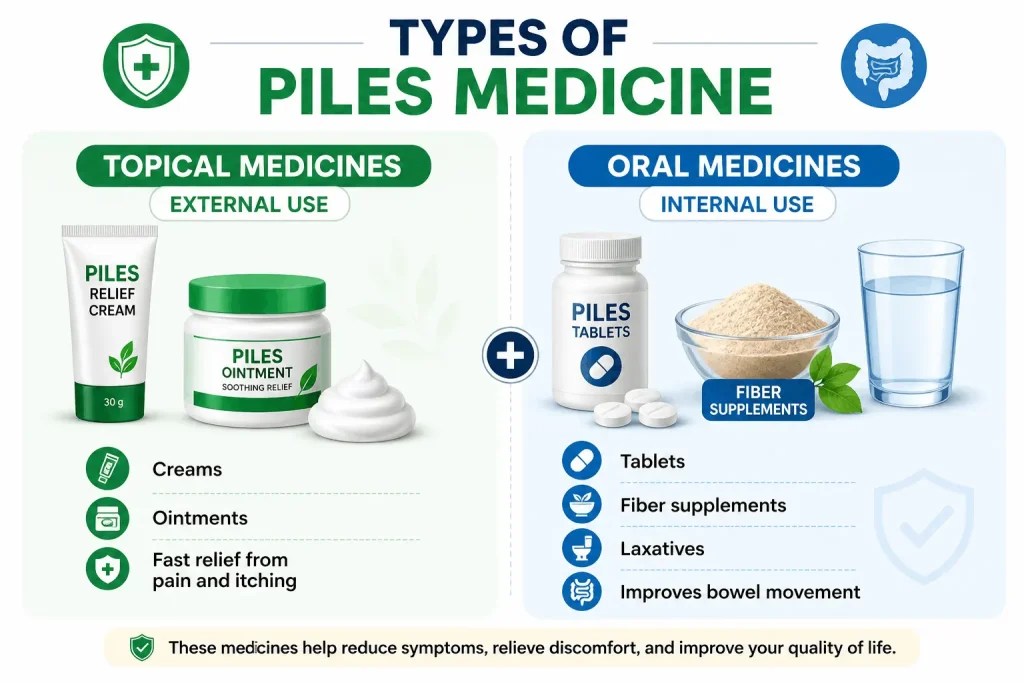
Hemorrhoids treatment Bangladesh are mainly divided into two types:
🔹 Topical Medicines (External Use)
Applied directly to the affected area
🔹 Oral Medicines (Internal Use)
Taken by mouth to manage symptoms
Each type works differently depending on your condition.
🟦 Best Creams and Ointments for Piles in Bangladesh
Topical medicines provide quick relief from external symptoms like itching, burning, and swelling.
🔹 Common Creams and Ointments
These are widely available in Bangladesh:
- Hydrocortisone creams (reduce inflammation)
- Lidocaine-based ointments (pain relief)
- Witch hazel products (soothing effect)
- Zinc oxide creams (protect skin)
✔ Benefits:
- Fast relief from pain and itching
- Easy to use
- Available without prescription
⚠ Important:
These medicines do not cure piles permanently. They only control symptoms.
🟦 Oral Medicines for Piles
Oral medicines help improve internal conditions such as constipation and inflammation.
🔹 Common Oral Treatments
✔ Pain Relievers
- Paracetamol
- Ibuprofen
Help reduce pain and discomfort
✔ Fiber Supplements
- Psyllium husk (Isabgol)
- Methylcellulose
✔ Soften stool
✔ Reduce straining
✔ Laxatives
- Lactulose
- Bisacodyl
Used when constipation is severe
✔ Anti-inflammatory Medicines
Help reduce swelling and irritation
✔ Benefits:
- Improve bowel movement
- Reduce pressure on veins
- Prevent worsening of piles
🟦 Piles Medicine Name in Bangladesh
If you are searching for piles medicine name in Bangladesh, it is important to understand that medicines are usually identified by their generic names, not just brand names. The same medicine may be sold under different brand names in different pharmacies.
🔹 Common Types of Piles Medicines
✔ Topical Medicines (Creams & Ointments)
These are applied directly to the affected area:
- Hydrocortisone (reduces inflammation)
- Lidocaine (reduces pain and itching)
- Zinc oxide (protects the skin)
- Witch hazel (soothing effect)
✔ Oral Medicines (Tablets & Supplements)
These help improve internal conditions:
- Paracetamol, Ibuprofen (pain relief)
- Psyllium husk / Isabgol (fiber supplement for constipation)
- Methylcellulose (improves bowel movement)
- Lactulose, Bisacodyl (laxatives for severe constipation)
🔹 Important Note
Many people look for specific brand names, but it is safer to focus on the type of medicine and its function. A qualified doctor or pharmacist can guide you to the right option based on your symptoms.
👉 Choosing the correct piles treatment medicine in Bangladesh depends on whether you have pain, bleeding, or constipation.
🟦 How to Choose the Right Piles Medicine
Choosing the right medicine depends on your symptoms:
✔ For mild pain and itching:
→ Use creams and ointments
✔ For constipation:
→ Use fiber supplements or laxatives
✔ For internal piles:
→ Combine oral + topical treatment
👉 If symptoms continue, consider advanced options:
Piles treatment options
🟦 When Medicine is Not Enough
Medicines are helpful in early stages, but they may not work if:
- Bleeding continues
- Pain becomes severe
- Piles become large or prolapsed
In such cases, you may need procedures or surgery.
👉 Learn about advanced treatment:
Laser piles treatment in Dhaka
👉 Minimally invasive option:
Rubber band ligation for piles
🟦 Safety Tips for Using Medicine for Piles
To get the best results:
✔ Use medicines as directed
✔ Do not overuse steroid creams
✔ Drink plenty of water
✔ Eat a high-fiber diet
✔ Avoid straining during bowel movement
🟦Common Home & Traditional Practices in Bangladesh (What You Should Know)
In Bangladesh, many people try home or traditional methods before visiting a doctor for piles. This is common, especially in the early stage of the problem.
Some people use herbal remedies, oil-based applications, or simple diet changes like eating more vegetables and drinking warm water. These methods may give temporary relief, especially for mild symptoms like itching or discomfort.
However, it is important to understand that most traditional remedies do not treat the root cause of piles. In some cases, they may even delay proper medical treatment.
If your symptoms are mild, lifestyle changes like a high-fiber diet and proper hydration can help. But if you notice bleeding, severe pain, or long-term discomfort, you should not rely only on home remedies.
🟦 H3: Are Herbal or Hamdard Medicines Effective?
In Bangladesh, some people use herbal or Hamdard medicine for piles as an alternative to standard treatment. These products are often based on traditional ingredients and are easily available.
Some users may feel temporary relief, especially in mild cases. This can be due to soothing effects or improved digestion. However, there is limited scientific evidence to confirm that these medicines can treat piles effectively or permanently.
It is also important to note that the quality and effectiveness of herbal products can vary. Using them without proper guidance may delay the right treatment.
👉 For safe and reliable results, it is better to follow medically recommended piles medicine in Bangladesh and consult a qualified doctor if symptoms continue.
🟦 Comparison of Piles Medicine Options
| Type | Use | Benefit | Limitation |
| Creams/Ointments | External | Fast relief | Temporary |
| Painkillers | Pain | Reduces discomfort | Does not cure |
| Fiber Supplements | Constipation | Prevents strain | Needs regular use |
| Laxatives | Severe constipation | Quick relief | Not for long-term use |
🟦 Frequently Asked Questions (FAQ)
❓ Which medicine is best for piles in Bangladesh?
It depends on symptoms. Creams help external pain, while fiber supplements are best for constipation-related piles.
❓ Can piles be cured by medicine alone?
Mild piles can be managed with medicine, but severe cases may require procedures or surgery.
❓ Is it safe to use piles cream daily?
Short-term use is safe, but long-term use (especially steroid creams) should be avoided without doctor advice.
❓ How long does piles medicine take to work?
Most medicines provide relief within a few days, but full improvement may take longer.
❓ Can I buy piles medicine without prescription?
Yes, many creams and supplements are available over the counter in Bangladesh.
❓ Which is the best piles medicine in Bangladesh?
The best piles medicine in Bangladesh depends on your symptoms. Creams help with pain and itching, while fiber supplements improve constipation. There is no single medicine for everyone. If symptoms continue, consult a doctor for proper treatment.
❓ What are common piles medicine names in Bangladesh?
Common piles medicine names in Bangladesh are based on generic types like hydrocortisone (for swelling), lidocaine (for pain), and psyllium husk (for constipation). These are available under different brand names in pharmacies.
🟦 What Should You Do Next?
Early treatment can prevent complications and reduce the need for surgery.
Read More
Hemorrhoids: Symptoms, Causes & Treatment
Hemorrhoids and what to do about them
🟦 Author & Review
 Written by: Md. Salauddin Biswas
MA in Medical Anthropology, University of Heidelberg, Germany | Former Senior Research Associate, James P Grant School of Public Health, BRAC University | Health Content Writer & SEO Specialist | Published: BMC Human Resources for Health | EEAT-Optimized Medical Content
 Medically reviewed and approved by: Dr. Muhammad Nazrul Islam
FCPS (Surgery) · MS (Colorectal Surgery) · FACS (Fellow, American College of Surgeons) Assistant Professor (Colorectal Surgery), Shaheed Suhrawardy Medical College & Hospital, Dhaka.
🟦 Medical Disclaimer
This content is for educational purposes only. Please consult a qualified doctor for proper diagnosis and treatment.
Frequently Asked Questions
Here are honest answers to some common questions people ask before seeing a colorectal surgeon in Dhaka.
These answers are general. Your own situation may be different — and that is exactly why a proper consultation matters.
How do I know if my bleeding is from piles or something more serious like cancer?
Bleeding from the anus is most commonly caused by piles (hemorrhoids) or an anal fissure — both of which are non-cancerous and treatable. However, colorectal polyps and cancer can also cause rectal bleeding, especially when bleeding is mixed with stool, accompanied by weight loss, persistent changes in bowel habits, or anemia. It is not possible to determine the cause by guessing alone. Any repeated or unexplained rectal bleeding should be properly evaluated by a colorectal surgeon. Early evaluation is always safer than waiting.
Do piles always need surgery? Can they be treated without an operation?
No, not all piles require surgery. Early-stage piles can often be managed with dietary changes, increased fiber and fluid intake, and medication. More advanced or complicated piles may require minimally invasive procedures or surgery depending on the severity and the patient’s individual condition. The right treatment plan should always be decided after a proper examination — because every patient is different. Delaying treatment, however, can allow the condition to worsen over time.
How long does recovery take after piles, fissure or hernia surgery?
Recovery time depends on the type of surgery performed. For anal and rectal surgeries such as piles or fissure operations, most patients are discharged within 24 hours and can return to light daily activities within 1 to 3 days, with full recovery taking approximately 4 to 6 weeks. For laparoscopic hernia surgery, most patients go home the same day or the next day, with recovery taking around 1 to 2 weeks. Open hernia surgery may require 4 to 6 weeks for full recovery. Your surgeon will give you specific guidance based on your procedure and overall health.
Is laparoscopic surgery better than open surgery for hernia and gallstones?
For many patients, laparoscopic surgery offers significant advantages — smaller incisions, less post-operative pain, shorter hospital stay and faster return to normal activities. For hernia and gallstone surgery in particular, laparoscopic techniques are now the preferred approach in most cases. However, not every patient is suitable for laparoscopic surgery. The best method depends on the size and complexity of the condition, the patient’s overall health, and the surgeon’s assessment. Both open and laparoscopic surgery are effective when performed by an experienced surgeon.
I feel embarrassed about my anal problem. Is it safe to talk to a doctor about it?
This is one of the most common concerns patients have — and it is completely understandable. Colorectal surgeons deal with these conditions every single day and are trained to handle them with full professionalism and sensitivity. Many patients in Bangladesh wait months or even years before seeking help due to embarrassment, and this delay often allows a simple, treatable condition to become more complicated. Whether you are male or female, young or old, your dignity and comfort are always respected during examination and treatment. You should never suffer in silence for a condition that has a solution.
When should I see a colorectal surgeon instead of a general doctor?
You should consider seeing a colorectal surgeon if you have persistent bleeding from the anus, severe pain during or after passing stool, a lump or swelling near the anus, discharge or pus from the anal area, a bulge in the groin or abdomen, unexplained weight loss with bowel changes, or symptoms of gallstones such as upper abdominal pain after eating. A colorectal surgeon has specialized training beyond general surgery and is best qualified to diagnose and treat conditions of the colon, rectum and anus accurately. Early consultation leads to earlier diagnosis and better outcomes.
Ready to Talk About Your Problem?
If you would like to discuss your condition or plan a visit, you can contact my assistant by phone or WhatsApp. Please share your name, age, main problem and how long you have had it.
Phone / WhatsApp
+8801976-842234
Assistant Professor ( Colorectal Surgery ),
Shaheed Suhrawardy Medical College and Hospital.
Government Registration Number: BMDC – A-42965
This form is for appointment requests and general questions only. It is not suitable for emergency medical advice.
 Serial: +88 09606990000