Quick Answer: Bright red blood after a bowel movement is most often caused by piles (haemorrhoids). The bright red color usually means the blood is fresh and comes from near the anus. In many cases it is not serious, but you should still get it checked if it keeps happening, gets heavier, or comes with other changes.
Medical Disclaimer:
This article is for general information only. It does not replace advice from a qualified doctor. If you are worried about any symptom, please speak to a medical professional. If you feel very unwell or pass a large amount of blood, seek urgent care.
Seeing blood is scary. Your heart may skip when you spot it on the toilet paper or in the toilet bowl. It is a moment that stops most people cold. But try to take a breath.
Bright red blood after bowel movement is one of the most common symptoms people quietly worry about — and in most cases, it has a straightforward explanation. Piles, also known as haemorrhoids, are the leading cause. This page will walk you through what that color clue usually means, where the blood tends to show up, and when it is worth speaking to a doctor.
You deserve a clear answer — not more worry.
This page focuses on one specific thing: what the color of the blood can tell you. Bright red blood after a bowel movement usually points to piles, a very common condition.
We will explain what that color clue means, where the blood typically appears, and when it makes sense to see a doctor. You will not find diagnosis or treatment advice here — just honest, calm information to help you take the right next step.
What Bright Red Blood After Bowel Movement Usually Means
The color of the blood is a useful clue.
Bright red blood is usually fresh. It has not travelled far inside your body. This often means it comes from a spot low down, near the anus or lower bowel.
Darker blood is different. It can look brown, maroon, or almost black. That kind of blood usually comes from higher up and has had time to change color.
So when you see bright red blood after a bowel movement, it points to a source close to the exit. Piles are the most common reason for this.
This page owns the “color clue” only. To understand what causes piles in the first place, see our guide to piles causes for the full picture.
Where You Might Notice the Blood
Bright red blood in stool can show up in a few places. Knowing where you saw it helps you describe it later.
You might notice:
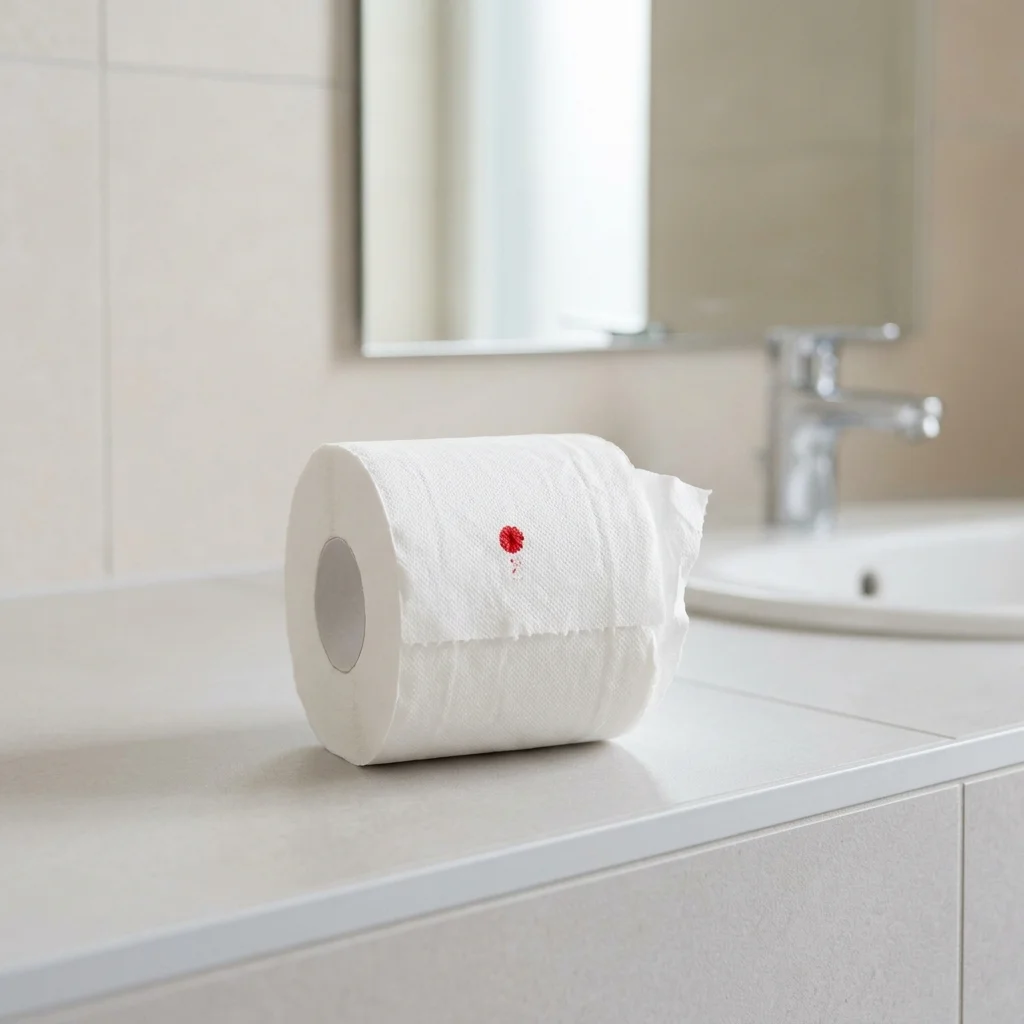
- Blood on the toilet paper when you wipe. This is one of the most common signs.
- Streaks on the stool surface. The blood sits on the outside, not mixed all the way through.
- Red in the toilet bowl or water. A few drops can turn the water pink or red.
Fresh blood after stool that sits on top of the stool or on the paper often fits the pattern seen with piles. It usually looks bright, not dark.
Try to notice how much you see and how often. That detail is helpful if you decide to speak to a professional.
Why Bright Red Blood Often Points to Piles
Piles are swollen blood vessels around the anus. They are delicate. When a hard stool passes, or when you strain, they can bleed a little.
That bleeding is usually bright red because the source is right at the end of the bowel. This is why red blood and piles are so often linked.
It helps to know this is common. Many people get piles at some point. Still, blood should never be ignored just because it is common.
We keep this page focused on the symptom clue. For the deeper “why,” including risk factors, read our piles symptom cluster.
When to Seek a Review
Please arrange to see a professional if:
- The bleeding keeps coming back or does not settle.
- The amount of blood is getting heavier.
- You feel dizzy, weak, or very tired.
- You have a change in your normal bowel habits.
- You notice weight loss you cannot explain.
- You are over 40 and seeing new bleeding.
A quick note for peace of mind: other conditions can also cause bleeding, so a check helps rule things out. We do not cover that comparison here — your doctor is the right person to sort it out.
If you ever pass a large amount of blood or feel faint, seek urgent medical care straight away.
Getting checked is not overreacting. It is the sensible, calm thing to do.
What to Do Next
You do not have to figure this out alone.
If the bleeding is mild and settles, keep an eye on it. Note when it happens and how much you see.
If any warning sign above fits you, book a review. A short appointment can bring real peace of mind and point you toward the right next step.
Ready to take that step? Book a review or explore our piles symptoms hub to learn more. Treatment options are covered separately, so once you know what is going on, you will know where to go next.
Frequently Asked Questions
Does bright red blood after stool mean piles?
Often, yes. Bright red blood usually comes from near the anus, and piles are the most common reason. Even so, a review is wise if it keeps happening or if you notice other changes.
Is bright red blood after a bowel movement serious?
In many cases, no — especially if it is a small amount and settles quickly. But it becomes more important to act if the bleeding is heavy, keeps returning, or comes alongside other symptoms like tiredness or bowel changes.
How much blood is normal?
A few streaks or spots on the paper or stool surface is common with piles. Larger amounts, or bleeding that keeps coming back, should always be checked by a professional.
Can children get bright red blood after a bowel movement?
Yes, though it is less common. In children, it is often linked to constipation or a small tear near the anus. Any blood in a child’s stool should be reviewed by a doctor promptly.
Should I go to A&E for bright red blood?
Not usually, unless the bleeding is very heavy, you feel faint, or you pass a large amount of blood. In that case, seek urgent care straight away. For smaller, calmer bleeding, booking a routine appointment is the right first step.
Does bright red blood always mean piles?
No. Piles are the most common cause, but bright red blood can occasionally come from other sources nearby. That is exactly why getting a professional review matters — so you know for certain.
What should I tell the doctor?
Note when the bleeding started, how often it happens, how much blood you see, and where you notice it (paper, bowl, or stool). Also mention any other changes, such as bowel habits, pain, or tiredness. The more detail you can share, the easier it is for your doctor to help.
Is it normal to feel embarrassed about this?
Completely. Many people delay seeing a doctor because of embarrassment. But doctors see this every day. Getting checked is the calm, sensible thing to do — and it gives you real answers.
Can stress or diet cause bleeding?
Diet plays a big role. Low-fibre foods can cause constipation, which strains the bowel and can trigger bleeding from piles. Stress alone does not cause bright red blood, but it can worsen bowel habits. Speak to a professional for personalised advice.
Will the bleeding stop on its own?
Sometimes, yes — mild bleeding from piles can settle with rest and dietary changes. But if it keeps coming back or gets worse, do not wait. Book a review so you understand what is happening.
Does bright red blood after stool mean piles?
Often, yes. Bright red blood usually comes from near the anus, and piles are the most common reason. Even so, a review is wise if it keeps happening.
Is bright red blood serious?
Usually it is not, especially if it is small and settles. It becomes more important if it is heavy, keeps returning, or comes with other changes.
How much blood is normal?
A few streaks or spots is common with piles. Larger amounts, or blood that keeps coming, should be checked by a professional.
References
- National Health Service (NHS). Haemorrhoids (piles).https://www.nhs.uk/conditions/haemorrhoids/
- Mayo Clinic. Rectal bleeding — Symptoms and causes.https://www.mayoclinic.org/symptoms/rectal-bleeding/basics/causes/sym-20050740
- American Society of Colon and Rectal Surgeons. Hemorrhoids expanded information.https://fascrs.org/patients/diseases-and-conditions/a-z/hemorrhoids-expanded-information
About the Author
Md. Salauddin Biswas is a Healthcare Website Structure & Content SEO Specialist. He helps doctors and clinics turn complex medical topics into clear, trustworthy content.
He holds an MA in Medical Anthropology from the University of Heidelberg, Germany, and an MA in Islamic History & Culture from the University of Dhaka, where he graduated with 1st Class, 1st Position.
He is a former Senior Research Associate at the James P Grant School of Public Health, BRAC University, and a published author in peer-reviewed health research. He has worked in healthcare SEO since 2017 and is based in Dhaka, Bangladesh. He also serves as Director and Head of Content at SA WEBSOFT.
Learn more at salauddinbiswas.com/about/.
Medically Reviewed By
Dr. Muhammad Nazrul Islam
FCPS (Surgery) · MS (Colorectal Surgery) · FACS (Fellow, American College of Surgeons)
Assistant Professor (Colorectal Surgery), Shaheed Suhrawardy Medical College & Hospital, Dhaka.
Last Updated: September 2026