
Quick Answer
Yes, painful bleeding during stool can happen with piles. But pain and bleeding together do not always mean you have piles.
You may notice bright red blood on the toilet paper, on the stool, or in the toilet after passing stool. You may also feel pain, burning, soreness, or discomfort around the anus.
Piles are one possible reason. Other problems can cause similar symptoms, so it is better not to assume the cause from the bleeding alone.
If the bleeding is heavy, does not stop, or comes with severe pain, black or dark-red stool, dizziness, or feeling faint, seek medical help promptly.
|
Medical Disclaimer This article provides general health information and does not diagnose or treat any individual condition. Rectal bleeding and anal pain can have different causes. If you have persistent, severe, or concerning symptoms, seek assessment from a qualified healthcare professional.
|
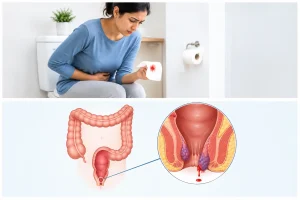
You Have Pain and Blood When You Pass Stool. What Could It Mean?
Seeing blood when you use the toilet can be frightening.
And when it hurts at the same time, you may immediately wonder:
“Is this piles?”
Sometimes, yes.
But your symptoms alone cannot tell you that piles are definitely the reason.
Pain and bleeding can happen with other conditions, too. That is why the important question is not simply “Do I have piles?”
It is:
“What is causing my pain and bleeding?”
That question is worth checking if the symptoms are new, repeated, or worrying you.
What Does Painful Bleeding During Stool Feel Like?
People can experience this in different ways.
You might notice:
- Blood when you wipe after passing stool
- Bright red blood on the outside of the stool
- Blood dripping into the toilet
- Pain while passing stool
- Burning or soreness around the anus
- Pain that continues for some time after using the toilet
- A lump, swelling, or tenderness around the anus
You may have only one or two of these symptoms.
You may also find that the bleeding happens only sometimes.
The color and amount of blood, when the pain happens, and what other symptoms you have can give a doctor useful information.
Can Piles Cause Pain and Bleeding Together?
They can.
For example, internal piles commonly cause bright red bleeding after a bowel movement. Internal piles that have not prolapsed are often not painful, while prolapsed internal piles can cause pain or discomfort. External piles can cause pain, tenderness, or a painful lump.
So if you have painful bleeding during stool, piles are one possible explanation.
But there is an important difference between saying “piles can cause this” and saying “this must be piles.”
The first is true.
The second cannot be decided from this symptom alone.
Does Painful Bleeding Always Mean Piles?
No.
This is one of the most important things to understand.
A small tear around the anus can also cause pain and bright red bleeding, particularly during or after passing stool. Other bowel and rectal conditions can also cause bleeding.
You may therefore find that two people have the same basic complaint — “It hurts and there is blood when I pass stool” — but have different reasons for it.
That is why self-diagnosing based on a single symptom can be misleading.
If you want to understand how piles and an anal fissure can differ, see our detailed guide:
[Piles or Fissure: What Could Be Causing Anal Pain?]
That page goes into the comparison in more depth. This page focuses on the symptom you are experiencing: painful bleeding with stool.
What Should You Pay Attention To?
You do not need to become your own doctor.
But noticing a few details can make it easier to explain the problem when you seek medical advice.
Notice the blood
Ask yourself:
- Is it bright red?
- Is it on the toilet paper?
- Is it on the outside of the stool?
- Is it mixed into the stool?
- Is there more blood than before?
- Does the bleeding keep coming back?
Notice the pain
Think about when you feel it.
Does it hurt when you pass stool?
Does the pain continue afterward?
Is there pain even when you are not using the toilet?
These details may help a doctor understand what needs to be checked.
Notice what else is happening
You may also have:
- A lump or swelling around the anus
- Itching
- Constipation
- Diarrhoea
- A change in your usual bowel habits
- Abdominal pain
- Fever
- Unusual tiredness
- Dizziness or weakness
You do not need to work out what each symptom means yourself.
Simply telling your doctor what you have noticed can be more useful than trying to diagnose yourself.
When Should You See a Doctor?
You should seek medical advice if:
- The bleeding keeps coming back.
- You have a lot of pain around the anus.
- The pain is getting worse.
- You notice a new lump or swelling.
- Your bowel habits have changed.
- You have blood mixed with stool.
- You have unexplained tiredness or weight loss.
Do not assume repeated rectal bleeding is simply piles. A healthcare professional can assess your symptoms and decide whether you need further examination or testing.
Get urgent medical help if the bleeding is heavy
Seek urgent care if:
- The bleeding does not stop.
- There is a lot of blood.
- The toilet water turns red.
- You see large blood clots.
- Your stool is black or very dark red.
- You have severe pain with bleeding.
- You feel dizzy, faint, very weak, or short of breath.
These signs do not tell you what the diagnosis is. They tell you that the bleeding or pain should not be ignored.
What Happens When You See a Doctor?
You may feel embarrassed talking about bleeding or pain around the anus.
That is understandable.
But these are common symptoms for doctors who deal with bowel and colorectal problems.
The doctor will usually start by asking you about the bleeding and pain — when they started, what the blood looks like, how often they happen, and whether you have noticed other symptoms.
Depending on your symptoms, the doctor may examine the area around the anus. An examination can help identify piles and other possible causes of pain or bleeding. Further tests may be needed in some situations.
You do not need to know the medical name for what you are experiencing.
You can simply say:
“I have pain when I pass stool, and I have noticed blood.”
That is enough to start the conversation.
The Bottom Line
Painful bleeding during stool can be caused by piles, but it can also have other causes.
If the bleeding is new or keeps happening, do not rely on guesswork.
Notice what is happening. Tell a healthcare professional what you have experienced. And if the bleeding is heavy or the pain is severe, seek medical care promptly.
You do not need to feel embarrassed about asking for help.
Blood and pain during a bowel movement are symptoms worth taking seriously — but they are also symptoms that can be assessed and understood.
Frequently Asked Questions
Can piles cause painful bleeding during stool?
Yes. Piles can cause rectal bleeding, usually with bright red blood seen on the toilet paper, stool, or in the toilet after a bowel movement. Some types of piles can also cause anal pain or discomfort. However, painful bleeding during stool does not by itself confirm that you have piles.
Is painful bleeding during stool always caused by piles?
No. Pain and bleeding during a bowel movement can have more than one possible cause. For example, an anal fissure can cause sharp pain during bowel movements along with bright red bleeding. Other bowel conditions can also cause rectal bleeding. This is why it is better not to diagnose the cause based on symptoms alone.
What does bright red blood with pain during stool mean?
Bright red blood after a bowel movement often comes from the lower part of the digestive tract, including the anus or rectum. Piles and anal fissures are two possible causes when bleeding occurs with pain during stool. The color and timing of the bleeding can give a doctor useful information, but they cannot confirm the diagnosis by themselves.
When should I see a doctor for painful rectal bleeding?
You should arrange a medical assessment if you have rectal bleeding, especially when it is accompanied by pain or keeps happening. Seek urgent medical help if the stool is black or dark red, the bleeding is heavy or does not stop, or you feel dizzy, faint, very weak, or unwell. Severe anal pain with fever also needs urgent medical attention.
What should I tell my doctor about painful bleeding during stool?
Tell your doctor when the pain starts, when you notice the blood, what the blood looks like, and whether the problem happens every time you pass stool or only sometimes. You can also mention any lump, itching, changes in bowel habits, or other symptoms. Your doctor may use your medical history and an examination to work out what is causing the bleeding and pain.
Author
MA in Medical Anthropology, Heidelberg University, Germany
Healthcare SEO Specialist | Public Health Researcher
Former Senior Research Associate, James P Grant School of Public Health, BRAC University
Co-Researcher, REACHOUT Consortium
Medical Reviewer
Dr. Muhammad Nazrul Islam
MBBS, BCS (Health), FCPS (Surgery), MS (Colorectal Surgery), FACS
Assistant Professor, Colorectal Surgery
Medical review: Specialist review
Last reviewed: September 2026
References
- National Institute of Diabetes and Digestive and Kidney Diseases (NIDDK). Symptoms & Causes of Hemorrhoids. url: NIDDK: Symptoms & Causes of Hemorrhoids: https://www.niddk.nih.gov/health-information/digestive-diseases/hemorrhoids/symptoms-causes
- National Health Service (NHS). Bleeding from the bottom (rectal bleeding). url: NHS: Rectal bleeding: https://www.nhs.uk/symptoms/bleeding-from-the-bottom-rectal-bleeding/
- National Institute of Diabetes and Digestive and Kidney Diseases (NIDDK). Symptoms & Causes of GI Bleeding. url: NIDDK: GI bleeding. https://www.niddk.nih.gov/health-information/digestive-diseases/gastrointestinal-bleeding/symptoms-causes
- National Health Service (NHS). Anal pain. url NHS: Anal pain: https://www.nhs.uk/symptoms/anal-pain/
- National Institute of Diabetes and Digestive and Kidney Diseases (NIDDK). Diagnosis of Hemorrhoids. url: NIDDK: Diagnosis of Hemorrhoids: https://www.niddk.nih.gov/health-information/digestive-diseases/hemorrhoids/diagnosis
- American Society of Colon and Rectal Surgeons. The ASCRS Textbook of Colon and Rectal Surgery.