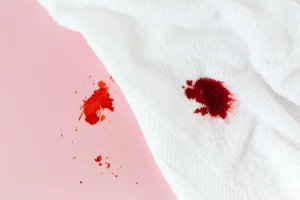
Is rectal bleeding during stool (পায়খানার সময় রক্ত ) a sign of piles?
Yes, it often is. Piles — also called hemorrhoids, or পাইলসের সমস্যা in everyday talk — are swollen blood vessels near your back passage. They bleed easily when a stool passes over them.
The blood is usually bright red. You may see it on toilet paper, on the surface of the stool, or in the toilet bowl. It is often painless.
If the bleeding is heavy, dark, or comes with other symptoms, see a doctor promptly.
Medical Disclaimer:This article is for general information only. It is not a substitute for professional medical advice, diagnosis, or treatment. If you are concerned about rectal bleeding or any other symptom, please consult a qualified healthcare professional. Do not delay seeking medical advice based on anything you read here. |
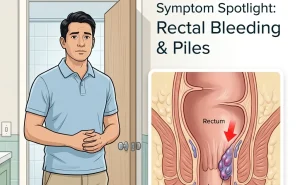
Seeing blood when you go to the toilet is scary. Your mind races. You worry about what it might mean.
In Bangladesh, many people notice পায়খানার সময় রক্ত and quietly panic. Please take a breath first.
Here is something important to know: bright red rectal bleeding during stool is very often caused by piles. It is one of the most common reasons people visit a doctor. You are not alone, and in many cases, it is not something to panic about.
What Does the Blood Usually Look Like?
Most people notice bleeding from piles in one of these ways:
- Bright red blood on the toilet paper after wiping
- A few drops of blood in the toilet bowl
- Thin streaks of blood on the outside of the stool
The colour matters. Bright red blood usually means the source is low down — near the back passage. That is exactly where piles sit.
Many patients simply call this মলের সাথে রক্ত — blood with the stool. It is a common way people describe what they see.
Why Do Piles Bleed?
Piles are swollen, fragile blood vessels. When a stool — especially a hard one — passes over them, the surface can scrape and bleed. This is the main reason behind পায়খানার সময় রক্ত, the bleeding people notice. (Read our article: পাইলস সম্পর্কে সহজ ভাষায় জানুন এবং সচেতন থাকুন)
That is why piles bleeding usually happens during or just after a bowel movement. Straining and pressure make it more likely.
Other signs that often appear alongside piles bleeding include:
- Itching or irritation near the back passage
- A small soft lump you can feel near the opening
- Mild পিছনে জ্বালা — burning or discomfort at the back passage
- Some discomfort when sitting or passing stool
Many people with piles notice blood but feel little or no pain. Painless bright red bleeding is one of the most recognised signs.
Could It Be Something Else?
Piles are the most common reason for rectal bleeding during stool. But they are not the only one.
Small tears near the back passage, constipation, or other conditions can also cause bleeding.
That is why it is worth paying attention. Note the colour, how often it happens, and any other changes. This helps your doctor narrow it down quickly.
This page is not the place to go through all possible causes — that goes beyond what this article covers. If you want a broader picture, your doctor is the right first step. (To know more about piles symptom, read our article: Piles Symptoms: All the Signs You Should Know)
Red Flags: When to See a Doctor Soon
Most piles bleeding is mild and settles on its own. But some signs need prompt medical attention.
Book an appointment if you notice:
- Dark red, maroon, or black stools — this can point to bleeding higher up
- Bleeding that is heavy, frequent, or does not stop
- মলের সাথে রক্ত mixed all the way through the stool, not just on the surface
- A change in bowel habits lasting more than two weeks
- Unexplained weight loss, tiredness, or feeling faint
- Bleeding with fever or severe pain
- You are over 40 and this is a new symptom
None of these automatically means something serious. They are simply signs a doctor should assess. Getting checked is always the right call when you are unsure.
A Word on Worry
It is normal to feel frightened when you see blood. Most people do.
But rectal bleeding during stool is something doctors see every day. Piles are behind it far more often than anything alarming.
Many people in Bangladesh feel too shy to talk about পাইলসের সমস্যা. Please do not let that stop you. The fact that you noticed the পায়খানার সময় রক্ত and are looking into it is a good thing.
Stay calm. Watch for red flags. Take the next step when you are ready.
What to Do Next
If you want to understand the full picture of piles symptoms, visit our piles symptoms guide. It covers what else to look for and helps you feel prepared before you speak to a doctor.
You do not have to figure this out alone.
References
- National Health Service (NHS). Piles (haemorrhoids). www.nhs.uk
- American Society of Colon and Rectal Surgeons (ASCRS). Hemorrhoids Expanded Information. www.fascrs.org
- Mayo Clinic. Rectal Bleeding — Symptoms and Causes. www.mayoclinic.org
About the Author
Md. Salauddin Biswas is a Healthcare Website Structure & Content SEO Specialist. He helps doctors and clinics turn complex medical topics into clear, trustworthy content.
He holds an MA in Medical Anthropology from the University of Heidelberg, Germany, and an MA in Islamic History & Culture from the University of Dhaka, where he graduated with 1st Class, 1st Position.
He is a former Senior Research Associate at the James P Grant School of Public Health, BRAC University, and a published author in peer-reviewed health research. He has worked in healthcare SEO since 2017 and is based in Dhaka, Bangladesh. He also serves as Director and Head of Content at SA WEBSOFT.
Learn more at salauddinbiswas.com/about/.
Medically Reviewed By
Dr. Muhammad Nazrul Islam
FCPS (Surgery) · MS (Colorectal Surgery) · FACS (Fellow, American College of Surgeons)
Assistant Professor (Colorectal Surgery), Shaheed Suhrawardy Medical College & Hospital, Dhaka.
Last Updated: August 2026